
Every pizza and pasta afficianado knows that the sauce is what makes the dish. A slightly sweet flavor partnered with some tang and spice make for perfect pizza and pasta sauces.
San Marzano and Roma tomatoes are both varieties of the plum tomato but despite being the same varietal, they have several differences between them. Plum tomato varieties are defined as those that have a higher flesh to juice ratio, meaning they are a much meatier tomato. Some of the most well known plum tomato varieties are Roma, San Marzano, Amish Paste, and Big Mama. Their higher percentage of meaty flesh to juice make plum tomatoes an ideal variety for canning and for sauces.
Check out these differences and similarities, the best uses for each, along with tips for growing each in your own garden.
Primary Differences
The primary differences between Roma and San Marzano tomatoes relate to their flavor profile, their appearance, and their origins. In a quick summary, here are the main differences between these two varieties of tomatoes:
- Acidity & Taste: San Marzanos are less acidic than Romas and have a sweeter flavor
- Interior of the Tomato: San Marzanos have less seeds and are slightly thinner skinned than Romas
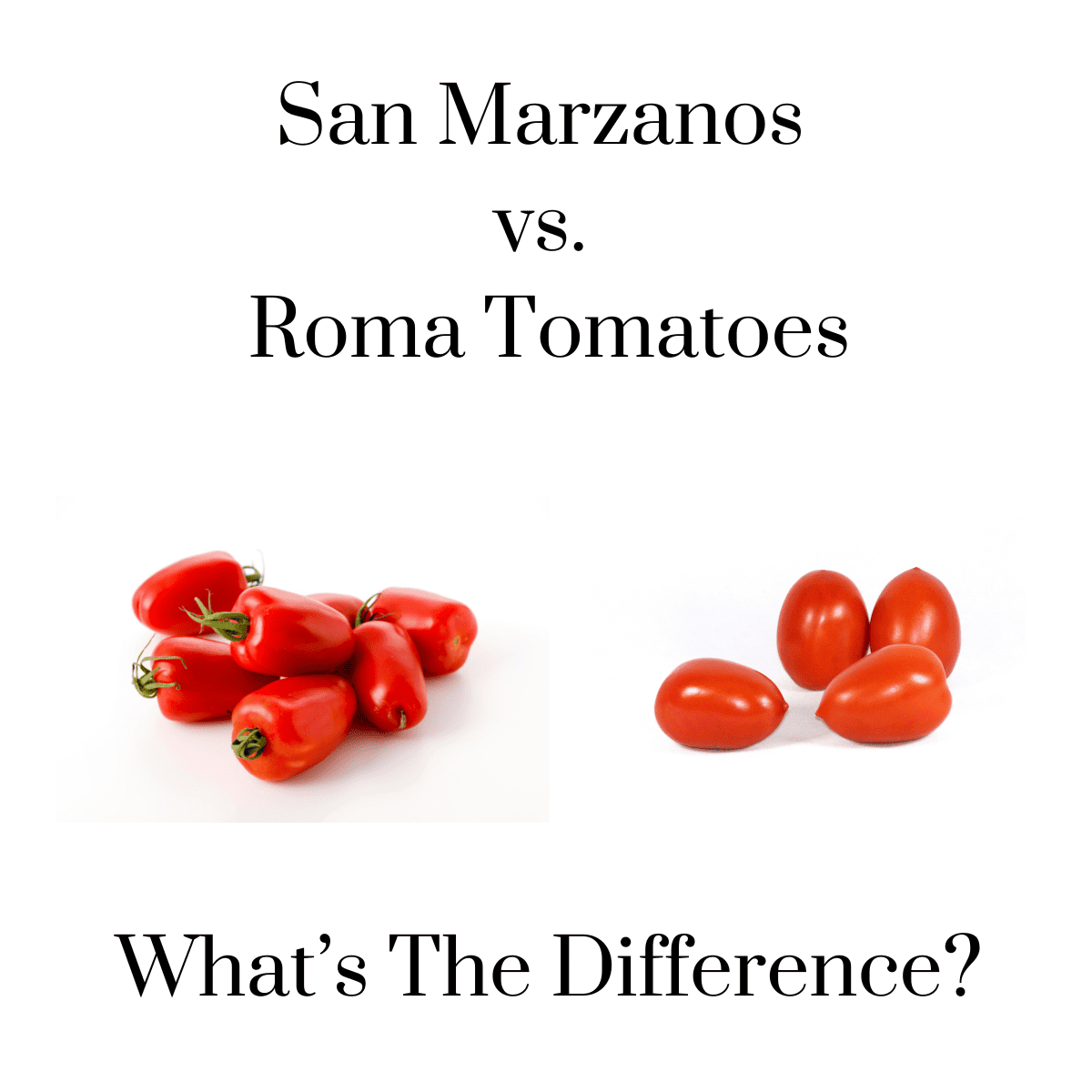
- Appearance: San Marzanos have a more oblong shape and are more narrow with a pointy end vs. Romas more smooth, oval appearance.
- Origin: San Marzanos originate from Italy and even now are only allowed to be labeled as such if from that region of Italy and harvested adhering to strict standards.
- Cultivation: The San Marzano tomato has been cultivated for hundreds of years while the Roma tomato was developed in 1955.
Let's dive into more detail on each of these differences, starting with the most important difference that we all care about...how they taste!
Acidity
San Marzano tomatoes have mild to low acidity and a jammy, sweet taste. The San Marzano tomato has slightly thick skin and firm flesh similar to that of Romas, but with a lower water content. Conversely, Roma tomatoes have high acidity, higher water content and a slightly tangy flavor. True San Marzano tomatoes have strict standards as to when they are allowed to be harvested and are not allowed to be picked until perfectly ripened on the vine. This could attribute to their sweeter flavor and lower water content.
Appearance
San Marzano tomatoes can be recognized by their elongated shape with a slight point at their base. These tomatoes are thinner and pointier than Romas which have a characteristic oval shape and rounded base.
Origin
True San Marzano tomatoes are only grown in the Campania region of Italy, near Naples where they thrive in the area's volcanic rich soil near the famed Mount Vesuvius. San Marzano's are thought to have been cultivated in this region of Italy as far back as the late 1700's. The first seeds are thought to have been a gift from Peruvian royalty visiting the Kingdom of Naples. They have a DOP (Denominazione di Origine Protetta) certification which translates to "Protected Designation of Origin" for these types of regulated Italian foods. Legitimate San Marzano tomatoes will have this DOP seal on the can and will not say San Marzano style vs. San Marzano.

Roma tomatoes are a much younger varietal, developed by scientist, William Porte in 1955 in the United States. It was developed with the goals of being disease and pest resistant and able to thrive in many different climates. Within the Roma family there are several variants including Granadero, Heinz and Plum Regal. An even more disease resistant variety of the original Roma was developed in 1963 by Joseph Harris as a cross between a Roma and a California Top VR9.
Flavor
Because San Marzano tomatoes have a lower moisture content and milder acidity than Romas, this varietal has a sweet, jammy flavor. This sweetness makes San Marzanos a prime choice for flavorful Italian and Medierranean dishes such as pasta sauces and stews. Due to the fact that true San Marzano tomatoes have strict guidelines as to when they can be harvested, this could also contribute to their delicious flavor as they are truly vine-ripened tomatoes.
Roma tomatoes are less sweet and have a higher water content and acidity than their San Marzano cousins. They are still a great candidate for sauces, salsas, and canning, but some consider San Marzanos to have a better flavor overall and are the best bet to use for sauces.
Similarities
Disease resistance: Both San Marzano and Roma tomatoes are considered gardener friendly varieties and are not particularly finnicky or disease prone, making these varieties an excellent choice for the hobby gardener. San Marzanos can be more prone to blossom end rot which can be caused by irregular watering and insufficient calcium in the soil.
Flesh to juice ratio: Both of these varieties have a high flesh to juice ratio with low moisture content. They have thicker flesh and fewer seeds than many tomato varietals and are not as watery.
Variety: Both of these tomato varieties are from the plum tomato family which translates to a more meaty texture than other tomato types.
Best uses for Roma
Popular uses for Roma tomatoes include canning, sauces and tomato pastes. Due to its lower water content and thicker flesh, it lends itself well to cooking down into these types of tomato sauces and pastes. Romas are also a great choice to use in salsa or for roasting and drying due to the lower moisture content.
Best Uses for San Marzano
San Marzanos concentrated sweetness and jammy flavor lend themselves well to marinara sauces, pizza sauces, roasted sauces and stews. They are considered the gold standard when it comes to Italian cuisine including homemade sauces.



Leave a Reply